Housekeeping July 6, 2019
Posted by Will Thomas in Uncategorized.add a comment
Note: all posts from this blog up to this point have been exported to https://rational-action.com/etherwave/. A small amount of formatting and functionality was lost in the transfer, but there are no ads on that site.
Jan Golinski on the Personas of Humphry Davy April 30, 2018
Posted by Will Thomas in EWP Book Club.Tags: Alexander von Humboldt, Hans Christian Ørsted, Humphry Davy, Jan Golinski, Jane Kerr Apreece, Johann Wilhelm Ritter, Joseph Banks, Samuel Coleridge
add a comment
The time of Ether Wave Propaganda has come and gone, but happily its archives remain available, and conveniently it can still serve as a place to drop a post should the need arise.
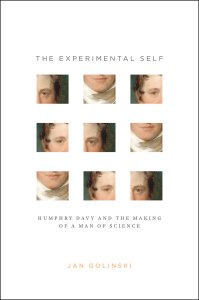 Probably a couple of years ago now, I received in the mail an unsolicited copy of Jan Golinski’s book, The Experimental Self: Humphry Davy and the Making of a Man of Science (University of Chicago Press, 2016). This was no doubt because I’d previously written about Golinski and Davy on this blog, particularly here. But by this time I’d moved on from academic history and did not get around to reading the book. (Currently, if you want to read me, I’m regularly writing with a talented four-person team about U.S. science policy for the American Institute of Physics here.)
However, the opportunity has come for a brief revival of EWP. I had to have a surgery on April 16 — don’t worry, I expect to be fine — and have been forced to stay home to recuperate. This means I had time to plunge back into the world of early 19th-century science, and so here at last is my review of The Experimental Self.
Anthropologists and the ‘Depopulation’ Problem September 6, 2016
Posted by Christopher Donohue in Uncategorized.add a comment
A familiar trope in both American and European anthropology was the discussion of the ‘extinction’ of the savage tribes. It was taken as a kind of gospel that while civilized races in the modern world would increase, “savage” and “primitive” races would diminish and decline over time. Of course, there were those who believed that modernity was not beneficial to modern man, but even though who considered modern conditions to be degenerate, also underscored that “savage” tribes were quickly declining. For the emerging social sciences, the true problem in the early years of the 20th century was not the existence of the decline, but its causes.
In the early 20th century, the decline of savage peoples was bound in theories of population generally, which, as with most turn of the century anthropology, has not invited critical commentary. Everyone had a theory concerning the decline of “savages” “primitives” or “natives.” Friedrich…
View original post 2,362 more words
International Society for Intellectual History Paper: Adolphe Quetelet’s Social Mechanics in Turn of the Century American Sociology May 3, 2016
Posted by Christopher Donohue in History of the Human Sciences.Tags: Lester Frank Ward, Rudolf von Jhering, William Blackstone
add a comment
*Digression Begins Here*
One of the most wonderful happenings of research is finding one’s subject in unexpected places. The idea of “social mechanics” is to be found in the philosophy of law of Rudolf von Jhering (22 August 1818 – 17 September 1892). In the United States, Jhering most famous work was in its English translation. Published in 1914, Law as a Means to an End (published in translation in 1914) had the following central arguments. The first was that there was no “natural contract.” This was contrary to the jurisprudence of William Blackstone, which posited (like many others) the existence of an original contract as one of the conditions of modern society. Jhering was reacting against a very established natural law tradition. Conversely, Jhering underscored that law was simply the most convenient organization found by man. Morality and personhood were outside of law. It was not that law was amoral. It was that morality was outside of law. Law had no justification outside that it was convenient and that it provided a social function for society.
International Society for Intellectual History Paper: The Odd Career of Adolphe Quetelet in Early American Social Theory May 2, 2016
Posted by Christopher Donohue in History of the Human Sciences.Tags: Adolphe Quetelet, Auguste Comte, Justus Liebig, Louis Agassi
add a comment
I will have a response to all of my Zilsel friends shortly. It will be titled “Hunting for the Unicorn: Further Thoughts on Science and the Dissenting Sciences”
*Digression Begins Here*
One of my consistent complaints about our understanding of nineteenth century social theory in the United States is that there is little sustained efforts on these topics due to the problem of relevance. My contention was (now some years ago in “The Nineteenth Century Problem“) that our understanding of nineteenth century American intellectual history (as very narrowly defined by the history of ideas, so as to not include the history of social movements or ideologies) was hampered by the issue of relevance. We have a basic problem of knowing so little about nineteenth century social theory that we must resort to boot-strapping mechanisms.
Thus, historians of ideas and historians of science would like to think that they can study anything they’d like. But this is simply not true. I am discussing this since many issues were addressed with my Zilsel friends last week. One was the issue of justification of case studies and of topics for analysis. My respondent (the extremely smart and gracious Volny Fages , who throughout put up with my bad manners) questioned why I justified my attention to the pseudosciences and even my choice of case studies.
For My Zilsel Friends, Gordon Tullock and Public Choice: The Dissenter as Gadfly April 17, 2016
Posted by Christopher Donohue in History of Economic Thought, The Unified Theory of Christopher's Scholarly Interests.Tags: Gordon Tullock, James Buchanan
add a comment
I. Gordon Tullock and Joseph Agassi- A Brief Digression.
In the course of talking with Joseph on the first day of my questioning of him, I mentioned Gordon Tullock. Tullock and Joseph were good friends. Agassi met him where he was at Stanford and Tullock tried to work with Popper. Undeterred by Popper’s inability to work with Tullock, Tullock then went on to be a post-doc at the University of Virginia (though he only had a J.D) while spending most of his later years at George Mason University. Tullock, throughout his writings acknowledged his fondness for Popper, particularly his suspicion of dogma. By dogma, Tullock meant almost all of economics not written by Gordon Tullock. There are many Tullock anecdotes related to me by Agassi, but one which I shared with him was Tullock’s objection to seat-belts. Seat-belts were instituted in the 1970s to protect drivers from death. No, Gordon responded, the way to make drivers safe is to place a knife in the middle of the steering wheel, so that if drivers speed and shop short, they will be impaled instantly. There is also a page of Tullock insults.
For My Zilsel Friends, The Boar in the Vineyard: The Anthropology of Napoleon Chagnon April 17, 2016
Posted by Christopher Donohue in 20th-Century-Science Historiography, History of the Human Sciences, The Unified Theory of Christopher's Scholarly Interests.Tags: E.O. Wilson, Lee Cronk, Napoleon Chagnon, Robin Fox
add a comment
The “boar” of the title refers to Martin Luther and his heresy, referring to the famous bull of Pope Leo X. In the early modern world, the boar stood for the problem of heresy in the faithful church.
I. The “World’s Most Controversial Anthropologist”
Napoleon Chagnon has been christened the “world’s most controversial anthropologist” by the New York Times. Chagnon enjoys the label, it is on his faculty web site. Why is he the world’s most controversial anthropologist? I give two reasons. 1) in a book published in 2000, “Darkness in El Dorado,” he was accused with James Neel, a well-regarded epidemiologist, of exacerbating a measles outbreak in order to test the fitness of tribes of Yanomami in Northern Brazil and Southern Venezuela. These charges, offered by a journalist, were dismissed by the American Anthropological Association. 2) his linking of social status, with reproductive success or of cultural success with biological success. Chagnon argued, as had his adviser and mentor the geneticist and epidemiologist Jim Neel in the 1970s and 1980 (most explicitly in “On Being Headman” in 1980) that those Yanomami villagers who were good at warfare, good at killing had high social status. Aggression and warlike behavior (through mechanisms not really explained) have become social virtues due to their biological benefits. As a result of their high social status, they enjoyed reproductive success. They had more children than villagers less adept at warfare. Aggression persists, moreover, because it is evolutionarily adaptive and it is the result of human beings acting rationally, in the pursuit of their own self-interest as well as those of their kin.
Making Joseph Agassi the Subject of a Scholarly Work Leads to Nothing but Questions February 16, 2016
Posted by Christopher Donohue in Agassi and the 20th century.Tags: Imre Lakatos, Joseph Agassi, Karl Popper, Larry Laudan, Paul Feyerabend
2 comments
I am at the start of a highly interesting venture, writing about an important living philosopher of science, Joseph Agassi, the significance of his ideas and how the development of those ideas informs our understanding of the development of postwar history and philosophy of science. It is a very high-risk (people tell me) venture. I hope it works. This is not something that historians of science (or philosophers of science, sociologists of science) do very much of, in any aspect, as I will describe. There are of course numerous examples of living philosophers writing about living philosophers and living philosophers discussing dead ones. But, our history of science kin don’t really (and apologies to those who do) address the complex heritage of philosophy of science, except to suit very specific purposes. Philosophy of science is usually deployed in order to suit a methodological or theoretical approach. This is very different than writing about the philosophy of science as a historical development. Last, no one has really begun to ask, among this contemporary or just-past generation of philosophers of science, are there any worthy of attention? This is a serious problem, as it is a serious problem for my writing and thinking about Agassi.
I have argued, not explicitly, that Agassi (and his close friends, students and admirers), the development of his ideas and what that development illustrates about the course of post-war Anglo-American philosophy is worthy of a scholarly treatment, but why? I shall begin to address that in this essay. I have earlier discussed how Agassi’s influence is very hard to measure. He is now very well-cited, but does this mean that his influence is at its peak? How plausible is this when philosophy of science (but not the philosophy of the social sciences, to add complication to a complication) today is very different from when Agassi first developed the core of his philosophical research program.
Herbert Spencer on Instinct and Intelligence: The Background of the “Cambridge Mind” January 3, 2016
Posted by Christopher Donohue in Uncategorized.add a comment
In this post for the Grote Club, I reexamine Herbert Spencer’s discussion of a fundamental dispute in early psychology and intellectual history: the degree of difference between instinct and intelligence.
Simon Cook previously described the novel account of the human mind which emerged before the First World War- the Cambridge Mind. He considers the development of this conception of brain and behavior to be a critical moment in the early history of the social sciences in Britain, informing the views of both Alfred Marshall and W.H.R. Rivers, but to very different effects. From my vantage point of American intellectual history and history of science, I find a number elements of “the Cambridge Mind” interesting.
View original post 1,815 more words

 Ether Wave Propaganda
For My Zilsel Friends, The Dissenting Sciences April 13, 2016
Posted by Christopher Donohue in 20th-Century-Science Historiography, Commentary Track, History of Economic Thought, History of the Human Sciences, The Unified Theory of Christopher's Scholarly Interests.Tags: Gordon Tullock, Napoleon Chagnon, Paul Feyerabend, Robin Fox, Thomas Kuhn
1 comment so far
I. Some Opening Thoughts On My Motivations
My friends at Zilsel have invited me to speak on a topic which I have been working on for quite some time, through my various researches in biosocial anthropology and human behavioral ecology, behavior genetics and public choice economics (in the work of Gordon Tullock especially) the “dissenting sciences.” I keep changing my mind on what to call them, having referred to them as “heterodox” and “pariah” sciences.
I am a bit in a muddle and I have decided to write my way out of this confusion. I have submitted two introductions to introduce my case studies. This is a version of those introductions.
Writing on the Pseudosciences
I do this because our field not only suffers from the privacy of criticism but also the privacy of ideas. As Will has written about many times, historians of science are too concerned with only publishing their very polished thoughts. This means that much of the knowledge of the profession is hidden from public view. This behavior is elitist.
And now everyone reading this hopefully has a better sense of my motivations. My thoughts on pseudoscience are a bit of a muddle, I am using this blog as a way to puzzle out this muddle, as a prelude to puzzling out some of my confusions in a talk on Tuesday. I am deliberately not holding back my unpolished thoughts in the hopes that others will do so. (more…)